5 Signs Your Warehouse Flooring Needs an Upgrade
January 15, 2025
Your warehouse floor takes a beating every single day. Forklifts moving thousands of pounds, pallets dragging across concrete, temperature swings, and relentless foot traffic—it all adds up.
Here’s the problem: most warehouse managers don’t think about flooring until something goes wrong. By then, what started as a small crack has become a safety hazard, an OSHA violation, or an expensive emergency repair.
Bad flooring isn’t just ugly—it creates safety risks, damages equipment, slows operations, and racks up maintenance costs. The good news? Most flooring problems give you warning signs before they spiral out of control.
In this guide, you’ll learn the five warning signs your warehouse floor needs attention, what it costs to wait, and your upgrade options.
5 Signs It’s Time for an Upgrade
If you’re seeing any of these warning signs, it’s time to act.
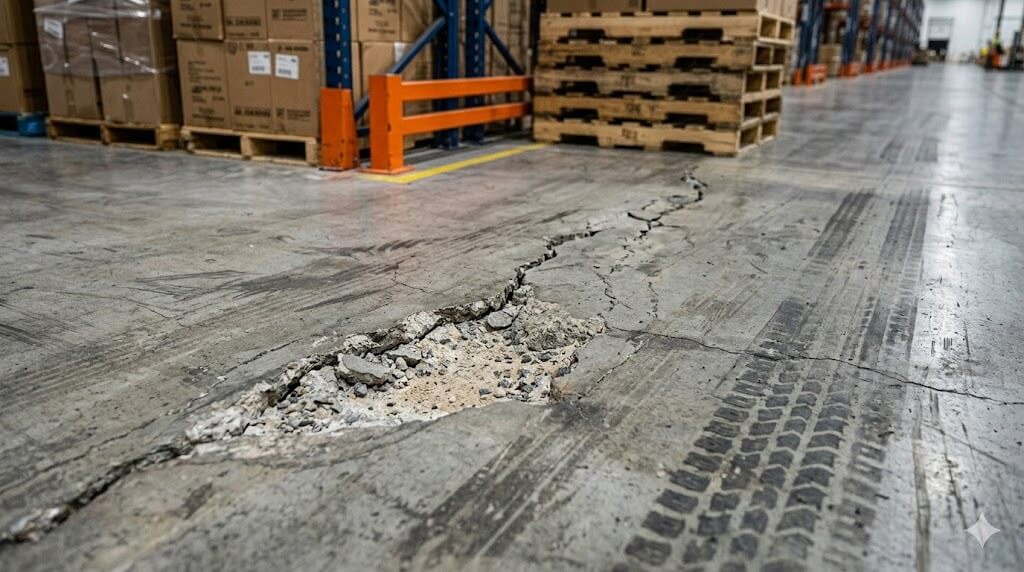
1. Visible Cracks or Spalling
What it is: Cracks running through concrete or spalling—when the surface layer flakes and chips off, exposing the aggregate underneath.
Why it happens: Heavy loads, freeze-thaw cycles (less common in Florida but still possible), poor installation, or moisture infiltration from below.
Why it matters:
Cracks widen over time, creating trip hazards and uneven surfaces. Spalling exposes rebar to moisture and corrosion, which weakens the structural integrity of the slab. Forklifts can catch on uneven edges, causing damage to equipment or creating dangerous driving conditions.
Red flag: Cracks wider than 1/4 inch or cracks that are rapidly spreading need immediate attention.
Solution: Depending on severity, options include grinding and patching for minor cracks or full resurfacing for extensive damage.
2. Uneven Surface or Trip Hazards
What it is: Floor settling, lippage (uneven joints where one slab sits higher than another), or raised sections caused by soil movement or poor subgrade preparation.
Why it happens: Soil shifting beneath the slab, inadequate subgrade compaction during installation, or moisture expansion and contraction over time.
Why it matters:
OSHA treats uneven floors as trip hazards. In 2025, OSHA can fine you up to $16,131 per violation for workplace hazards. Forklifts struggle on uneven surfaces, leading to increased maintenance costs and slower operations. There’s also the risk of pallets tipping or loads shifting during transport.
Red flag: You notice bumps when driving forklifts, or there are visible height differences at slab joints.
Solution: Floor leveling, grinding high spots, and stabilizing joints can restore a smooth, safe surface.
3. Persistent Staining or Moisture Issues
What it is: Oil stains, water pooling, efflorescence (white mineral deposits that appear on concrete), or dark moisture patches that won’t dry.
Why it happens: Unsealed concrete absorbs liquids like a sponge. Poor drainage, groundwater seepage, or high humidity can cause persistent moisture problems.
Florida-specific challenge:
Central Florida’s high humidity (averaging 74%) and elevated water tables make moisture problems worse. Trapped moisture beneath coatings can push finishes upward, causing peeling and bubbling. Temperature swings between air-conditioned interiors and hot outdoor air also cause expansion and contraction damage.
Why it matters:
Moisture weakens concrete over time, breaking down the surface and creating soft spots. Wet floors are slippery, increasing slip-and-fall risks. In humid environments, persistent moisture can lead to mold growth, which creates health concerns.
Red flag: Staining that won’t clean, recurring moisture patches, or visible efflorescence.
Solution: Sealing the concrete, installing moisture barriers, or applying epoxy or urethane coatings can prevent absorption and protect the surface.
4. Excessive Dust or Debris
What it is: Concrete dusting—a fine powder that appears on the floor surface and gets kicked up by foot and forklift traffic.
Why it happens: Unsealed or deteriorating concrete surfaces break down under constant traffic, releasing tiny concrete particles.
Why it matters:
Dust settles on inventory, equipment, and work surfaces, creating cleanliness issues and potentially damaging sensitive electronics or warehouse automation systems. Constant cleaning increases labor costs. More importantly, dusting signals surface degradation—and it will only get worse over time.
Red flag: You need to sweep daily, or you see visible dust clouds when forklifts drive through aisles.
Solution: Concrete polishing, epoxy coating, or urethane sealer can harden the surface and eliminate dusting for good.
5. Increased Forklift Maintenance Costs
What it is: A noticeable uptick in forklift repairs—especially tire replacements, suspension issues, and wheel bearings.
Why it happens: Uneven, cracked, or damaged floors create constant vibration and stress on forklift components.
Why it matters:
This is the hidden cost of bad flooring. Rough floors accelerate equipment wear and tear, leading to more frequent (and expensive) repairs. Downtime from forklift breakdowns slows operations and cuts into productivity. Operators also experience fatigue and discomfort when driving on rough surfaces all day.
Red flag: Maintenance logs show a spike in tire or suspension replacements over the past 6-12 months.
Cost impact: Forklift tires cost $200-$800 each. Premature replacement due to floor damage adds up fast—especially in high-traffic warehouses with multiple forklifts.
Solution: A smooth, level floor reduces equipment wear and extends the lifespan of your forklift fleet.
The Cost of Waiting (What Happens If You Ignore These Signs)
Delaying flooring repairs is a false economy. Here’s what you’re really risking.
Safety Risks and OSHA Violations
Trip hazards and slip-and-fall accidents lead to injury liability and workers’ compensation claims. OSHA doesn’t take workplace safety lightly—in 2025, penalties for unsafe working conditions can reach $16,131 per violation. Serious or willful violations? Up to $161,323 per violation.
Operational Delays and Lost Productivity
Uneven floors slow forklift traffic. Time spent cleaning up dust or repairing damaged equipment cuts into productivity. Emergency floor repairs often require partial or full warehouse shutdowns, which means lost revenue.
Example: A single day of downtime in a 100,000-square-foot warehouse can cost $10,000 or more in lost productivity and delayed shipments.
Equipment Damage
Forklifts, pallet jacks, and automated systems all suffer on damaged floors. Premature equipment replacement can cost tens of thousands of dollars. Damaged pallets and inventory caused by floor-related incidents add even more expense.
Higher Long-Term Repair Costs
Small cracks turn into structural problems. Spot repairs become full replacement projects. The cost difference is significant:
- Early repair: $2-$5 per square foot
- Full replacement: $8-$15 per square foot
Waiting doesn’t save money—it multiplies the cost.
Upgrade Options: What’s Right for Your Warehouse?
Depending on the severity of the damage, here are your main options.
1. Concrete Grinding and Leveling
What it is: Mechanically removing high spots and smoothing the surface to eliminate lippage and unevenness.
Best for: Uneven joints, minor surface issues, and preparation before applying coatings.
Cost: $1-$3 per square foot
Downtime: 1-3 days for large areas
2. Polished Concrete
What it is: A multi-step grinding and polishing process that creates a smooth, durable, reflective surface.
Best for: High-traffic areas, dust control, and warehouses that want a clean, professional appearance.
Pros: Low maintenance, reflective surface improves lighting, and eliminates concrete dusting permanently.
Cost: $4-$10 per square foot
3. Epoxy Coatings
What it is: A resin-based coating applied over the concrete surface, creating a seamless, durable finish.
Best for: Chemical resistance, moisture sealing, and moderate-traffic warehouses.
Pros: Seamless finish, easy to clean, excellent chemical resistance.
Cost: $3-$12 per square foot
4. Urethane Coatings
What it is: A polyurethane topcoat, often applied over an epoxy base layer, for maximum durability.
Best for: Heavy-traffic warehouses, extreme durability needs, and food or pharmaceutical facilities.
Pros: UV-stable, higher abrasion resistance than epoxy alone, faster cure time.
Florida advantage: Urethane performs better in high-humidity environments, resisting moisture damage and peeling.
Cost: $5-$15 per square foot
Recommendation: Work with a flooring professional to assess your specific needs. In Central Florida, humidity and climate play a major role in choosing the right solution.
Next Steps: Get a Professional Assessment
Don’t wait until small problems become safety hazards or expensive repairs. A professional flooring assessment identifies the root cause of the damage and recommends the best solution for your warehouse.
Titan Material Handling offers industrial flooring solutions designed specifically for Central Florida’s unique climate. We understand high-traffic warehouse environments, OSHA compliance requirements, and the performance demands of modern logistics operations.
Is your warehouse floor showing signs of wear? Don’t wait for a costly breakdown or an OSHA citation. Get a free flooring assessment from Titan Material Handling and protect your operations, your equipment, and your team.
Is Your Warehouse Floor Costing You Money?
Cracked, uneven, or worn flooring slows operations and increases safety risks. Get a free floor assessment and repair quote.